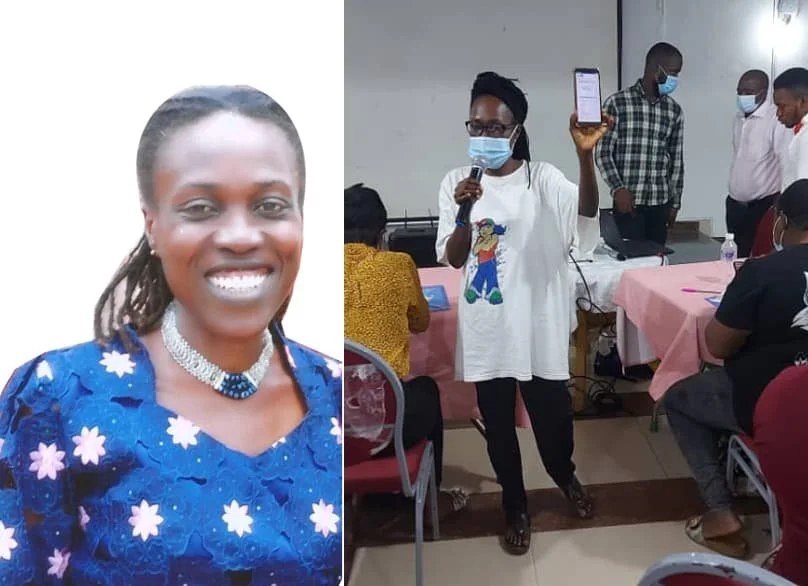
Community Spotlight: Get to know the work of Dumebi Celestina NKENCHOR-ACHUZIA from Nigeria!
Dumebi Celestina Nkenchor-Achuzia is a dedicated public health professional at Nigeria’s Centre for Disease Control and Prevention (NCDC), where she works as a Senior Liaison Officer and SORMAS Data Clerk.
Since joining SORMAS in 2020, she has been instrumental in real-time disease surveillance, ensuring rapid response to outbreaks like COVID-19, cholera and rabies. Her expertise spans data management, contact tracing and training healthcare workers.
During Delta State’s rabies outbreak, SORMAS enabled fast case tracking and vaccination campaigns, showcasing how SORMAS plays an important role in the surveillance and outbreak response.
Could you please briefly introduce yourself and your daily work with SORMAS?
My name is Dumebi Celestina NKENCHOR-ACHUZIA from Nigeria. I am currently a staff of Nigeria Centre for Disease Control and Prevention (NCDC) Subnational Department where I work as a Senior Liaison Officer (SLO), SORMAS Data Clerk, Administrative and Surveillance Officer, in Subnational Liaison Unit Delta State.
From background, I am a graduate of Post Graduate Diploma in Education (PGDE), Bachelor of Science (B.Sc) in Entrepreneurial and Business management, Oracle Certified Professional & Associate. I have gained many laboratories related skills such as preparing harmonized line list template spreadsheet (SITREP) etc. I am working with SORMAS since April 2020, during the COVID-19 pandemic till date.
Please explain a little bit what are your main tasks with SORMAS?
As a key contributor to disease surveillance and outbreak management, I oversee the verification and management of Rapid Diagnostic Test (RDT) results within the SORMAS platform, including deleting duplicate RDT cases and synchronizing RDT with Case Investigation Forms (CIFs). I am responsible for entering suspected and confirmed cases into SORMAS, ensuring accurate data entry for COVID-19, measles, cholera, rabies and other diseases, and linking lab results to cases. I also organize lab sample collection and monitor exposed individuals for symptoms during the incubation period, identifying secondary cases and linking them to outbreak clusters.
I conduct step-down training on the safe use of Ag-based RDTs for COVID-19 diagnosis and provide guidance on RDT and mobile Surveillance and Event Reporting System (mSERS, aggregate module) usage. Additionally, I familiarize health facilities with SORMAS usernames and passwords, ensuring seamless integration and data sharing across health system levels. I prepare weekly mSERS IDSR reports, generate harmonized line lists for COVID-19 Delta Mobile Lab, and update Delta State COVID-19 daily sample collection data on SORMAS spreadsheets for contact tracing and server updates.
My role includes analyzing communicable diseases using SORMAS, verifying and updating case records as new information becomes available and ensuring case definitions (suspected, probable, confirmed) are met before classification. I also conduct integrated supportive supervision for healthcare workers and Disease Surveillance Notification Officers monitor RDT kit accountability and provide real-time data to support decision-making during outbreaks. Through these efforts, I ensure accurate data sharing, reporting, and monitoring for local, national, and international health authorities.
What do you like about SORMAS?
I like the real time reporting of cases that enables implementation of quick responses, as well as the Training and Re-Training of Healthcare workers using SORMAS (RDT & mSERS) In addition to that I like the Monitoring and Evaluation for proper accountability of RDT Kits & Case Analysis updates.
What motivates you most in the daily work with SORMAS?
The highest motivation for my daily work with SORMAS is the Training and Re-Training of healthcare workers on how to work on the SORMAS.
Can you please explain a special situation when SORMAS made the difference before or during an outbreak or the COVID-19 pandemic?
In Nigeria, SORMAS was already in use for epidemic-prone diseases like Lassa fever. When the first COVID-19 case was detected in February 2020, it was quickly integrated into SORMAS, allowing for immediate digital case notification and monitoring.
The system enabled automated alerts to public health officials, ensuring a faster response compared to paper-based reporting. This was needed and one of SORMAS’ strongest features is real-time contact tracing. During this intense phase, Disease Surveillance Notification Officers and other health workers used mobile devices to register and track and follow up with people exposed to COVID-19. This prevented delayed responses and helped break transmission chains early.
SORMAS enabled health authorities in Delta State to effectively collect data on suspected and confirmed COVID-19 cases. This facilitated accurate and timely reporting, for tracking the virus’s spread. In addition to that, SORMAS facilitated the dissemination of accurate information to the public, educating communities on preventive measures, symptoms, and the importance of reporting any suspected cases. This was critical in combating misinformation and ensuring community compliance with health guidelines.
Another Scenario, where SORMAS made a difference, was a rabies outbreak in Delta state. Due to high rates of dog bites and inconsistent vaccinations among domestic animals. SORMAS played a key role in managing rabies surveillance and response. SORMAS allowed One Health approach (Agric, Health and Environment) authorities to track rabies cases effectively, particularly in reporting incidents of animal bites. By logging information on rabies exposure, health officials could promptly respond to potential outbreak situations.
SORMAS provided data that informed vaccination campaigns for dogs in high-risk areas. Targeted vaccination efforts were crucial in reducing rabies transmission, and SORMAS helped ensure that these efforts were evidence-based and data-driven. Using SORMAS, health authorities engaged with communities to raise awareness about rabies prevention. This included educating the public about the importance of vaccinating pets and the steps to take following a dog bite.
In summary, SORMAS has proven invaluable in managing public health responses during the COVID-19 pandemic and rabies outbreaks in Delta State. By providing reliable data collection, enhancing contact tracing, facilitating effective resource allocation, and fostering collaboration among stakeholders, SORMAS has helped mitigate outbreaks and protect public health.