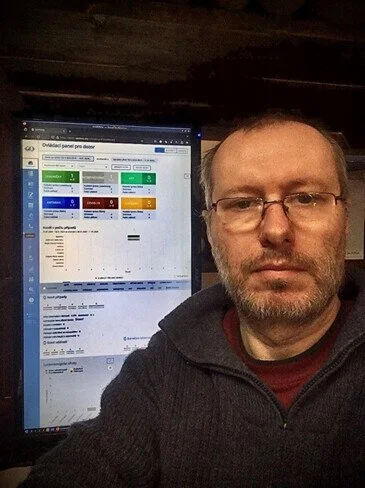
Community Spotlight: SORMAS in Czech by Jiří Podhorecký
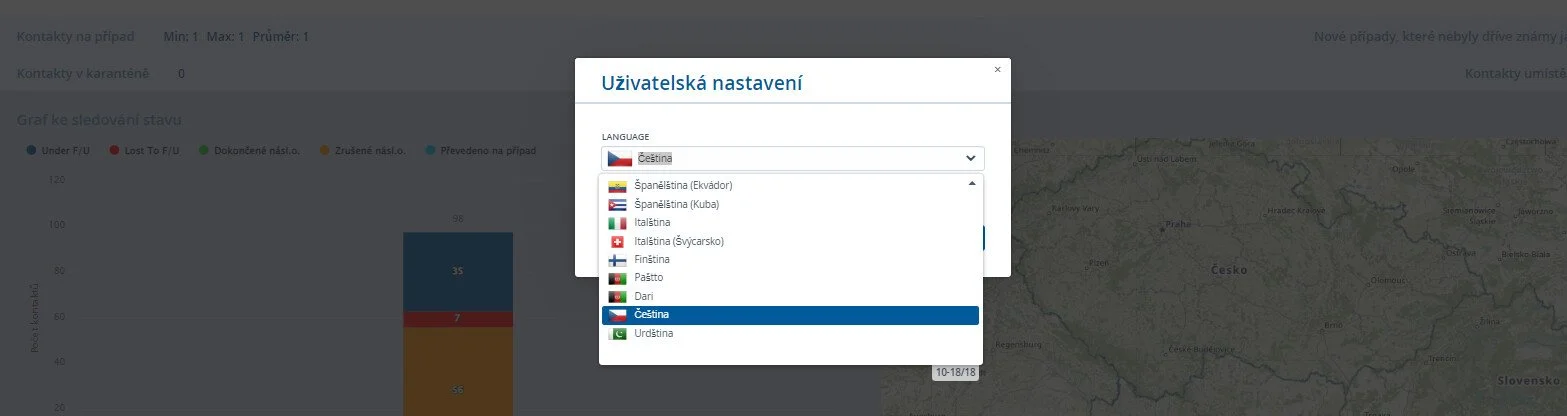
Support for multiple languages in SORMAS is largely due to the continued support and dedication of our volunteer SORMAS translation community. Jiří Podhorecký from Český Krumlov in Czechia has been volunteering his time to translate SORMAS into Czech (on Crowdin.sorm.as) and has been part of the team for over 2 years. A big thank you to Jiří for his dedication and continued support of SORMAS!
In the following post, we explore Jiří’s experiences, challenges faced in the realm of volunteer translation, and the fulfillment he derives from being a part of a global initiative like SORMAS. Through this narrative, we hope to shed light on the unsung heroes, like Jiří, who silently shape the world for the better, one translated word at a time.

What motivated you to contribute your time and skills as a volunteer translator?
Some time ago, volunteering was solely as a personal effort of people in a specific place with specific help. It is just that it is often difficult to fit this into everyday life and work responsibilities. I can’t remember where it was, but I first discovered the term “virtual volunteering” on a foreign website and it excited me. It was the answer to reconciling almost incompatible responsibilities and goals.
It forced me to decide how else to find fulfillment and reward for my efforts in my life, when it clearly wasn’t going to be just money.
So the reward for me became a feeling of usefulness, independent of money and a feeling of being part of something good. Only then did I look for ways to see what that might be in my case. Through various avenues I came to, among other things, translating software into my native language.
Can you give us an overview of your translation process? Do you have any strategies or tools that you find particularly useful?
I am only able to do translation of software that I am able to understand the functionality and purpose at both user and admin level. When I am first introduced to a resource, I focus non-linearly on the least problematic parts and simple translations. Gradually, I become familiar with specific terms and syntax rules, because every project is different and this must be respected.
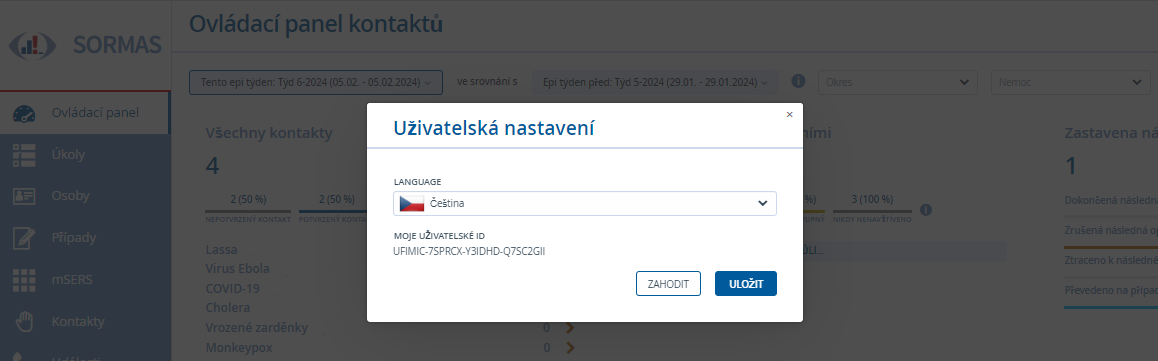
How do you think your translations contribute to the overall success of the SORMAS project?
I believe that in the future there will be some serious demand in my country, leading to the promotion of open-source software in both government and public health. The digitization of the public services is in the program priorities of the Government of the Czech Republic: https://digitalnicesko.gov.cz/.
The European Commission recommends the use of known efficient open-source solutions for public projects: Open Source Observatory (OSOR) | Joinup.
Healthcare IT systems in particular have long been built in our country by suppliers of closed technology solutions that can abuse market position and be unacceptably overpriced: Přiznání nemocnice: Zakázka za 150 milionů je ušitá na míru a předražená - Seznam Zprávy.
If there were to be public contracts where SORMAS could be used, I would also consider it a good argument that long-term maintained, localized software is available and the learning curve for its users is more pleasant due to localization. Open-source software also suits the reduction of financial pressures in tendering and offering system integration.
I am convinced that the topic and field of epidemiology is unmissable in healthcare and, given the near future, crucial to the health security of any country. The situation with COVID-19 is not over and there are other serious threats on the horizon.
Are there any specific goals that you have set yourself as a translator, either within the SORMAS project or on a wider scale?
Of course! Years ago, I wished to make some kind of voluntary contribution to the community using and developing open-source software. More specifically, open-source software that fits the classification of Digital Public Goods. I have seen that the lack of language localization can be an obstacle, especially in countries where universal English is not the native language and at the same time local conditions also require good linguistic qualities.
How do you see the future of your involvement in the translation community
(within SORMAS or in general)?
I’m trying to keep my feet on the ground, and I know I won’t be a prominent leader in the translation community. Rather, I see it as a positive that I have found a way for self-fulfillment to fill the fluid free time that I can allocate within my job responsibilities, and to contribute to something worthwhile at the same time.
Virtual volunteering is not an empty concept for me, it is a real activity in which I can constantly improve, find new contacts, with which I have done a huge amount of work over several years. The results do not disappear and can be improved. I am convinced that my work has been, or will later be, recognized by other users, and although it may not be essential, it can also be a contribution to maintaining the linguistic and cultural diversity of any nation. That is why it is worthwhile for me to continue translating.
See https://spotter.ngo where Jiří further discusses why it is important to be prepared for crisis situations and socially be able to manage them with the support of independent, specialized software (especially in the Czech context). There is also a spotlight on his translation work for the UN nonprofit Digital Impact Alliance at User spotlight: Jiří Podhorecký and his volunteer contributions to a more inclusive and accessible digital landscape – Digital Impact Alliance. Among his virtual volunteering activities, he also contributes to the OpenStreetMap public map, for example, at How did you contribute to OpenStreetMap? and the heatmap at Your OSM Heat Map @ neis-one.org
He also actively contributes data on everyday food and wrote a blog for the non-profit organization Open Food Facts about his motivations for contributing to public service projects: Global food database also for the Czech Republic 🇨🇿 – Open Food Facts blog
He is reachable on GitHub at trendspotter (Jiří Podhorecký) · GitHub and from time-to-time he tries to write about his experience with open-source software for Czech independent media.