
Community Spotlight: Koshal Chandra Subedee on Strengthening Nepal's Early Warning and Response
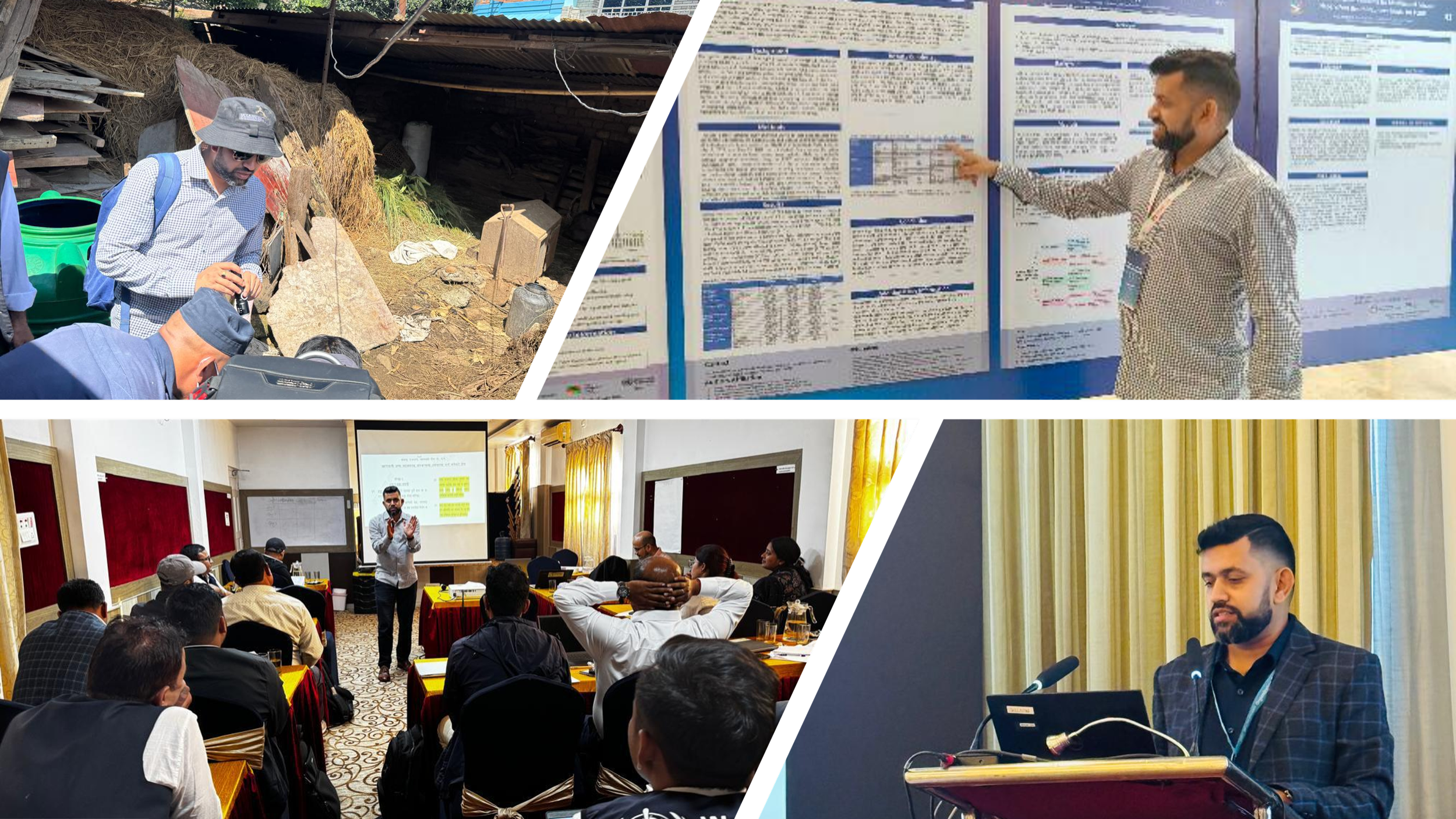
Meet Koshal Chandra Subedee, Nepal's national SORMAS focal point at the Epidemiology and Disease Control Division of the Ministry of Health and Food Safety. He shares how SORMAS is helping communities and frontline health workers detect outbreaks earlier, respond faster, and build a more resilient surveillance system across the country.
1. Could you introduce yourself and tell us a little about your role? When did you start working with SORMAS?
I am Koshal Chandra Subedee, a Public Health Inspector at Epidemiology and Disease Control Division (EDCD), Department of Health Services, Ministry of Health and Food Safety, Nepal. I currently work as national focal point for SORMAS alongside my responsibilities in infectious/climate sensitive disease surveillance, water quality surveillance and community-based surveillance.
I hold an MSc in Public Health and am an Advanced Field Epidemiology Training Fellow and have worked in Nepal’s government health system since 2007 with strong focus on infectious disease surveillance, outbreak investigation and response, public health research and coordination with international partners, INGOs/NGOs, professional organizations and academia in areas of my work.
My engagement with SORMAS began from April 2022 as a part of CORESMA project to strengthen real-time digital surveillance in Nepal.
2. How are you using SORMAS in your work and in the country?
Nepal adopted SORMAS to address the gaps in the country’s infectious disease surveillance system, particularly to enable early detection and response of adverse public health events and outbreaks even from the community level through real-time digital surveillance. SORMAS now has been an important real-time digital surveillance tool with features of both event-based and indicator-based reporting systems.
It is now a designated tool for health facility as well as community- based disease surveillance and a proposed tool for the Integrated Disease Surveillance in Nepal. It is customized as per the country’s needs and has integrated Epidemic Intelligence from Open Sources, Hotline (Call Center) reporting, water quality surveillance with support from World Health Organization and SORMAS Foundation and related organizations. This upgrading of SORMAS has made it flexible to get notification of adverse public health events leading to probable outbreaks from various sources in real time setting strengthening the country’s early warning and response function.
In addition, SORMAS has capacitated health care workers and Rapid Response Team members to verify the unusual events, assess its risk level and based on 7-1-7 model guided by the National Alert and Response Framework.
In my role, I use it for notification and verification of unusual public health events, outbreak alerts, case investigation and contact tracing. I also use it as a tool for capacity building of health care workers in areas of disease surveillance and outbreak response through regular SORMAS Training (Training of Trainers and Users Training) guided by the country’s disease surveillance program and activities.
3. Can you share an example of how SORMAS has made a difference in your day-to-day work?
SORMAS has made a great difference in my day-to-day work in areas of infectious disease surveillance. One clear example is how SORMAS has shortened the time between a community-level adverse public health event being observed, notified and it reaching to decision makers who can act on it.
With the recent adaptation of community-based disease surveillance system, community stakeholders including general people, female community health volunteers, teachers, local leaders and representatives- are now formally recognized as key informants who can report adverse public health events/threats directly to the Health Facilities or Health Care Workers who use SORMAS and fit that information in the syndromic surveillance system after verification making a possible disease less likely to get uncaptured in the system.
SORMAS gives that information a structured and digital pathway for further verification and response instead of being lost or delayed. With this, during outbreaks like cholera, dengue, scrub typhus SORMAS helps for initial risk assessment and faster mobilization of response teams, rather than relying solely on sentinel site-based reporting.
4. What plans do you have for SORMAS in Nepal?
As directed by the country’s disease surveillance strategy, national program and activities, Nepal’s rollout of SORMAS is planned to be completed after extending to every health care facility at local level through Community- Based Surveillance strategy.
My focus as per the provided role is to work for strengthening data quality and completeness, capacitating health care workers through SORMAS training and advocate on using SORMAS as an integrated disease surveillance platform covering all nationally prioritized infectious diseases ensuring it stays interoperable with existing HMIS and EWARS system for a stable, flexible and adoptable disease surveillance system.
5. What keeps you motivated in your work?
Having worked in the Nepal’s public health system since 2007, I’ve seen firsthand how much difference real-time, accurate and verified information makes during any public health emergency or an outbreak.
Helping and contributing to build a resilient surveillance system that empowers communities and frontline health workers to detect and report public health threats on time is what keeps me motivated and satisfied.
Every outbreak we investigate, every action we take for its response and control and every system improvement we make feels like a direct contribution to protecting health and prolonging life of Nepali citizen and communities.