
New Study Shows How SORMAS Strengthens Digital Surveillance and Outbreak Response in the DRC
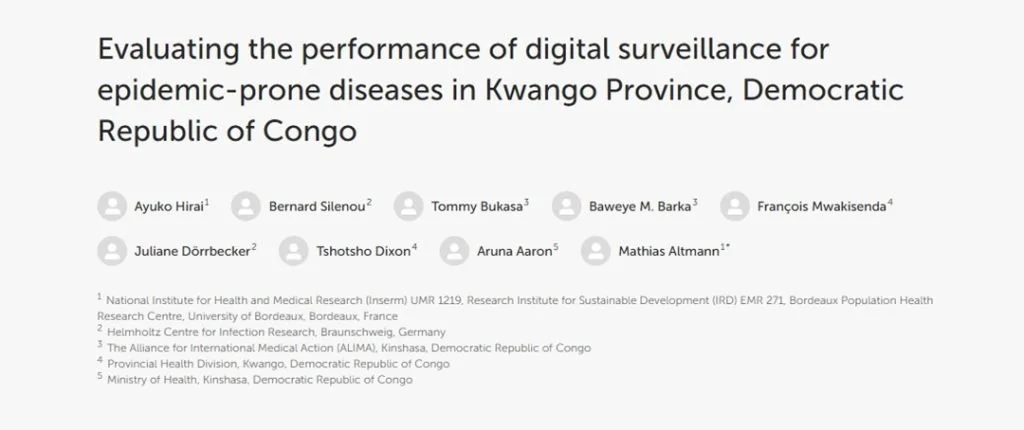
In a recent publication in Frontiers in Public Health titled “Evaluating the performance of digital surveillance for epidemic prone diseases in Kwango Province, Democratic Republic of Congo”, researchers from the University of Bordeaux, the Helmholtz Centre for Infection Research (HZI), ALIMA , the Provincial Health Division of Kwango, and the Ministry of Health in the Democratic Republic of Congo (DRC) collaborated on this study evaluating the a digital surveillance system (SORMAS) for epidemic-prone diseases in the southwestern region of the DRC.
Between July 2022 and December 2024, the pilot tested SORMAS under two different implementation models: 1) a facility level model, where health workers entered data directly at health centers; and 2) a health zone level model, where data entry was centralized at the health zone office.
The results showed that the facility level model significantly improved both completeness and timeliness of disease reporting. About 46 percent of cases were logged within one day of consultation in this model, compared to only about 5 percent when data entry was centralized. SORMAS also captured more cases than the traditional paper-based weekly epidemiological reports (WERs) for diseases such as measles, yellow fever, and mpox.
These findings highlight the potential of digital surveillance tools like SORMAS to strengthen outbreak detection and response in resource limited settings, particularly when implemented directly at the facility level.
Read the full article here: https://doi.org/10.3389/fpubh.2025.1669745
